Improving the experience of students managing their student loans in Nova Scotia
Canada, 2021
Overview
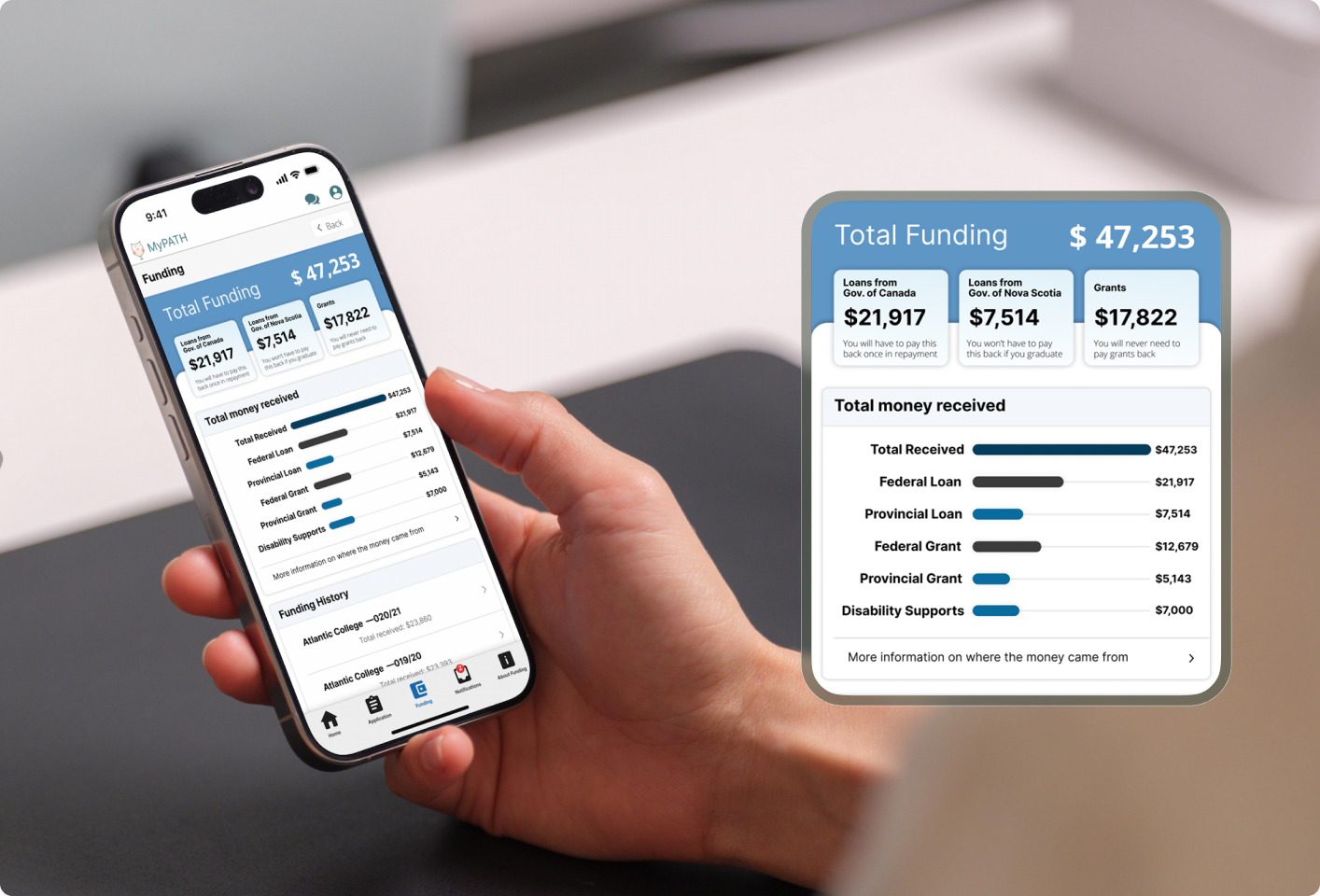
MyPath is the Nova Scotia Government portal where university students apply for loans and funding. The existing application system was outdated, confusing, and long overdue for an overhaul. As the lead designer, I partnered with the Student Assistance office to redesign the online portal with a mobile-first approach, aiming to reduce student frustration and drop-off rates.
- Document confusion: Students struggled to understand which documents to gather and in what order. Many never submitted forms, leaving applications incomplete.
- Unclear loan estimates: Students received less money than originally estimated, based on lack of understanding of it being an estimate and submitting wrong documentation.
- Poor awareness of loan forgiveness: Students didn't know about programs that could reduce their debt upon graduation, not that a portion of the money they receive were grants.
With these insights, I built rough mockups, restructured the information architecture, and created a prototype. I then conducted remote user testing, making quick fixes between sessions to test new ideas before the project concluded.
Unsubmitted documents: Many students abandoned applications because they didn't know what was being asked. Making document status and sequence visible became a key driver of completion.
Funding numbers: We discovered students were overwhelmed by funding figures. Once we broke down the amounts and clearly labeled which portions were grants, students understood that their actual debt was much lower than they feared.
Loan forgiveness: Students consistently missed information about the Loan Forgiveness Program. Which pardoned any provincial loans for eligible students upon graduation.
Process
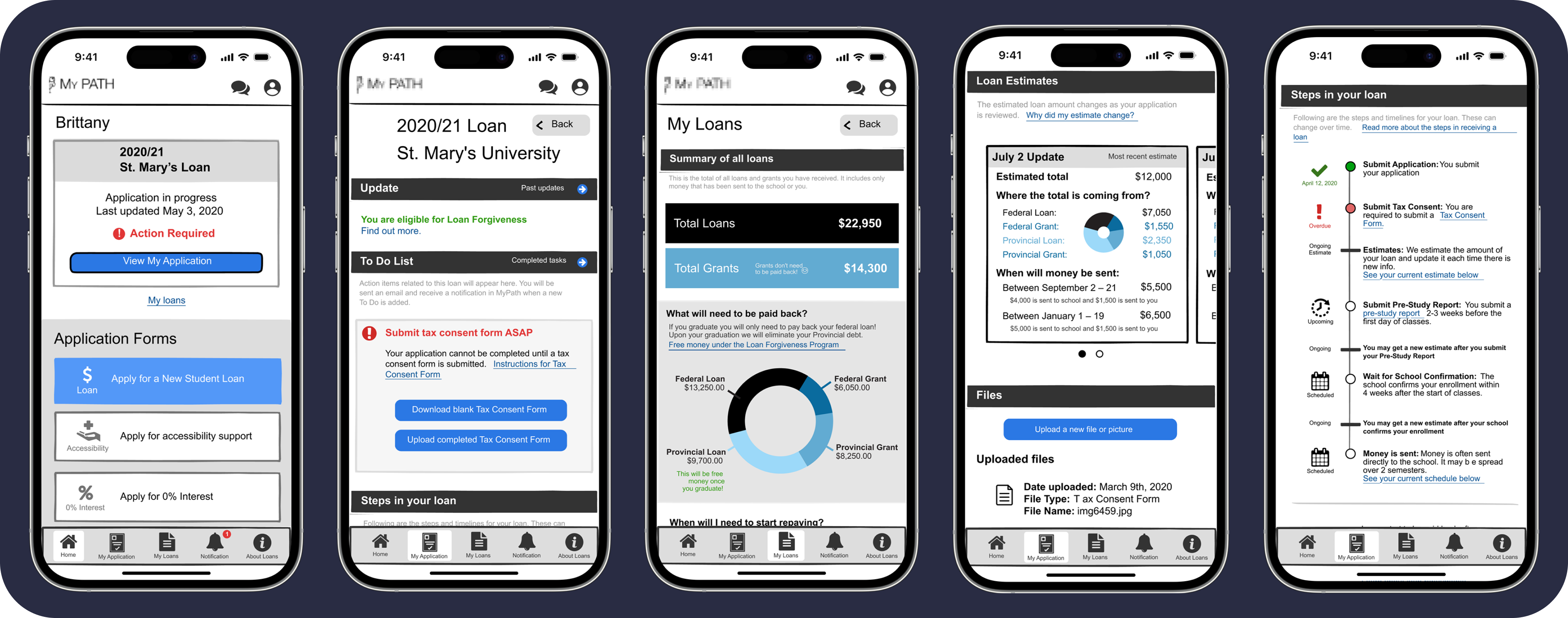
We followed a lean, research-driven process:
- Discovery interviews - Spoke with 5 students to uncover underlying problems beyond surface-level complaints.
- Low-fidelity prototypes - Built rough, clickable wireframes focused on flow, not visuals. Tested these with students to see if the identified issues were truly addressed.
- Iteration & refinement - Based on feedback, we adjusted the information architecture and task sequencing.
- High-fidelity prototypes - Created a polished, interactive version to present as a final concept to the provincial organization.
- Remote user testing - Conducted tests with quick fixes in between sessions, allowing us to validate new ideas in near real-time.
Throughout the process, I collaborated with an in-house project manager and project managers from Nova Scotia's Department of Labour and Advanced Education. The low-fidelity approach helped us avoid getting attached to visual details and focus purely on the experience.
Solution
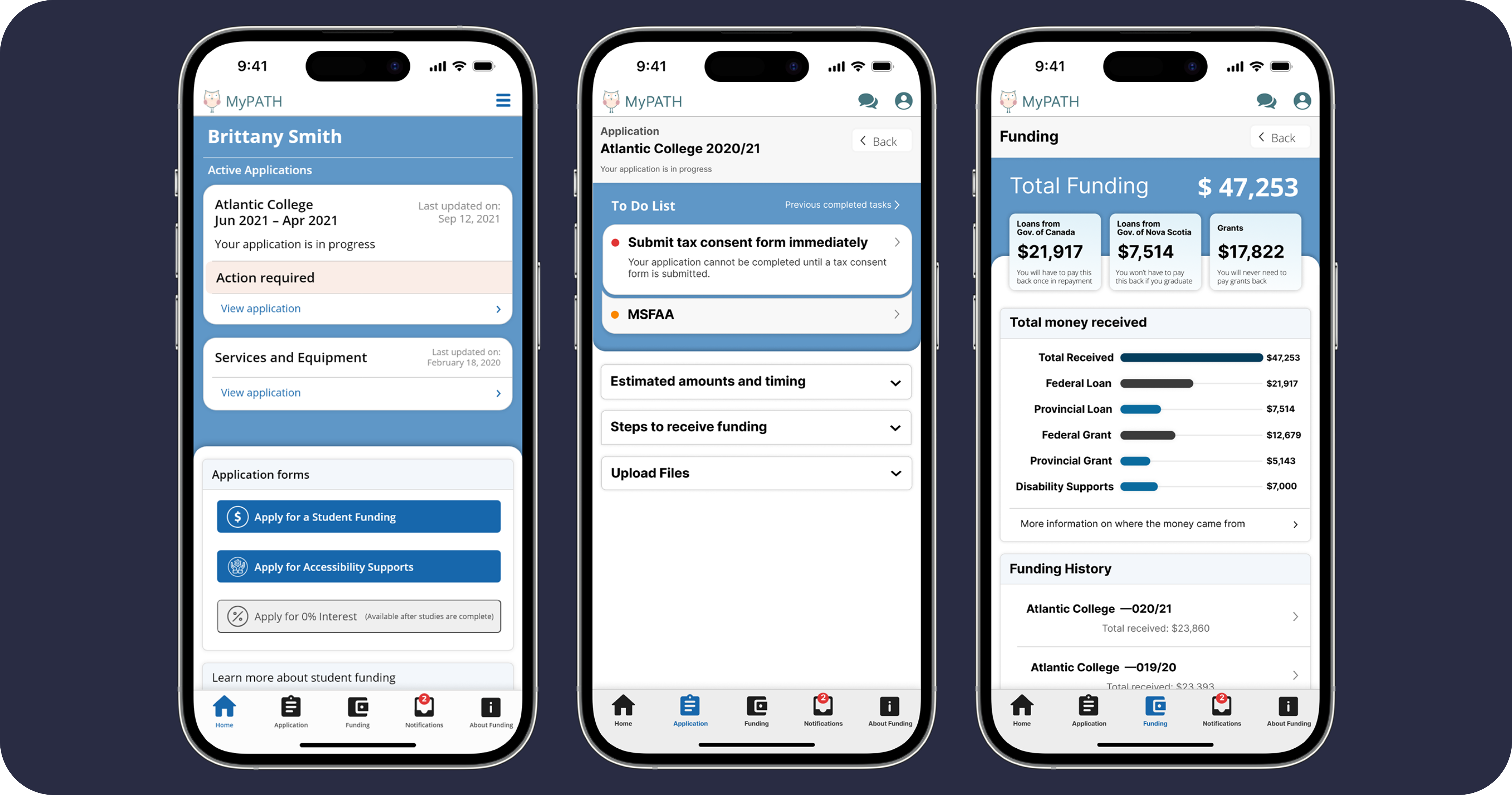
Homepage - A clear starting point where students can make new applications, check status, and see at a glance if any documentation is missing. Introduces a task-list approach to guide students step by step.
Current Application - Shows real-time progress and any pending documents that are blocking funding. If a student is simply waiting for a reply from the program, the screen makes that clear, reducing anxiety and unnecessary follow-up calls.
Funding - Details each bucket of funding: provincial loans, federal loans, and grants. This screen also highlights which portions can be forgiven upon graduation (e.g., the Loan Forgiveness Program), helping students see a path to reduced debt.
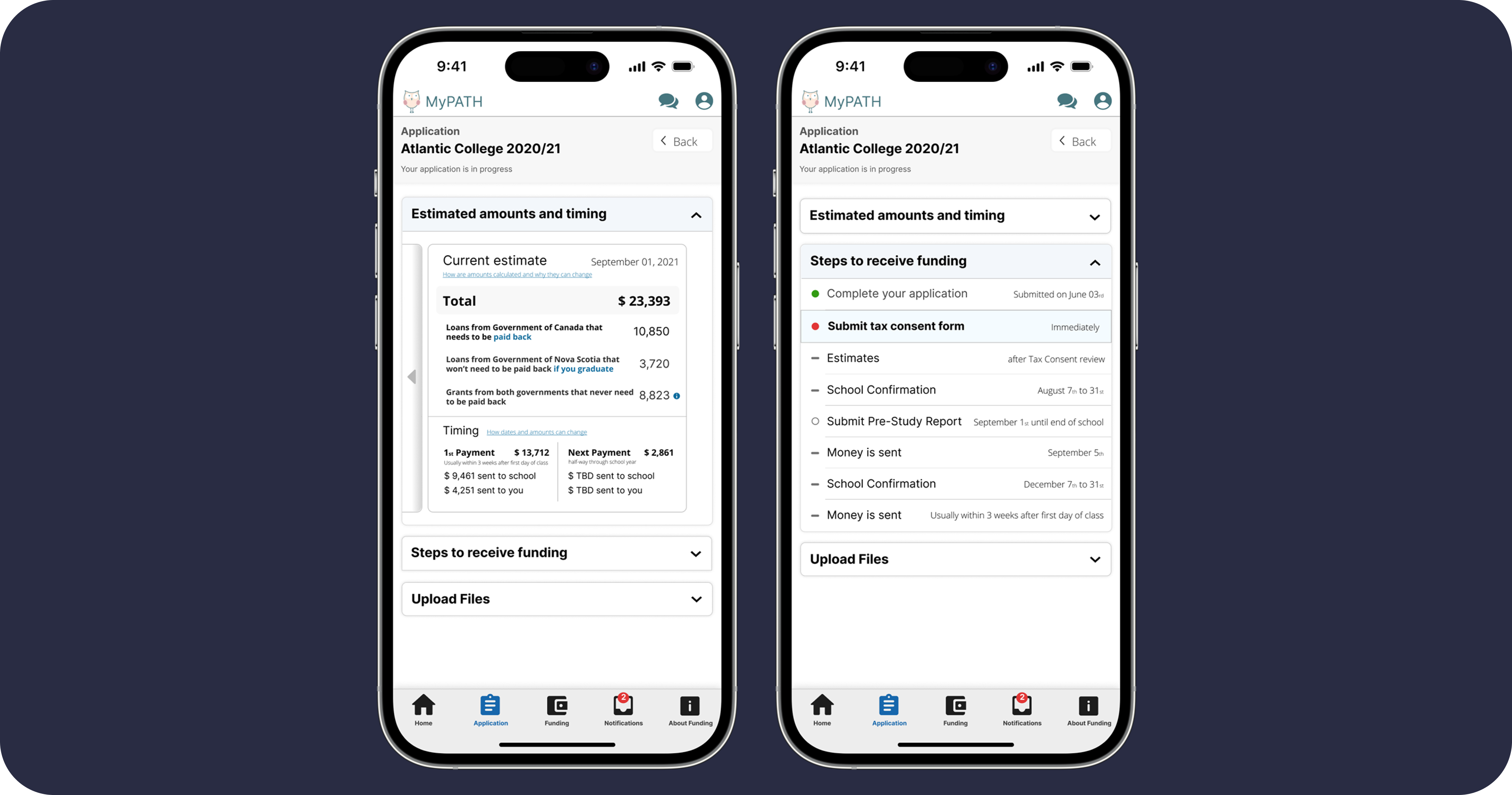
Loan Estimates - Dynamically updates as students submit documents. Shows how estimates change based on completed information. Critically, it explains that some grant money is sent directly to the school rather than to the student, preventing confusion about “missing” funds.
Steps to Receive Funding - A timeline view of the entire application process, including wait periods and actions required. This gives students a mental model of how long each stage takes and what comes next.
Outcomes
We delivered a formal presentation and report to the Executive Director of the Student Assistance Program, receiving positive feedback on both the research and the proposed design. The government team committed to moving the project into phased development, with MyPath as the blueprint for modernizing Nova Scotia's student aid portal.
The work was also presented to broader policy makers in Nova Scotia, helping align digital service design with provincial education goals. While ongoing development timelines are determined by government partners, the project successfully shifted internal understanding from “fixing a form” to redesigning a student's financial journey.