Healthcare Programs Project
Designing for the Future of Surgical Recovery: A Holistic Care Platform
Canada, 2023 – 2025
Overview
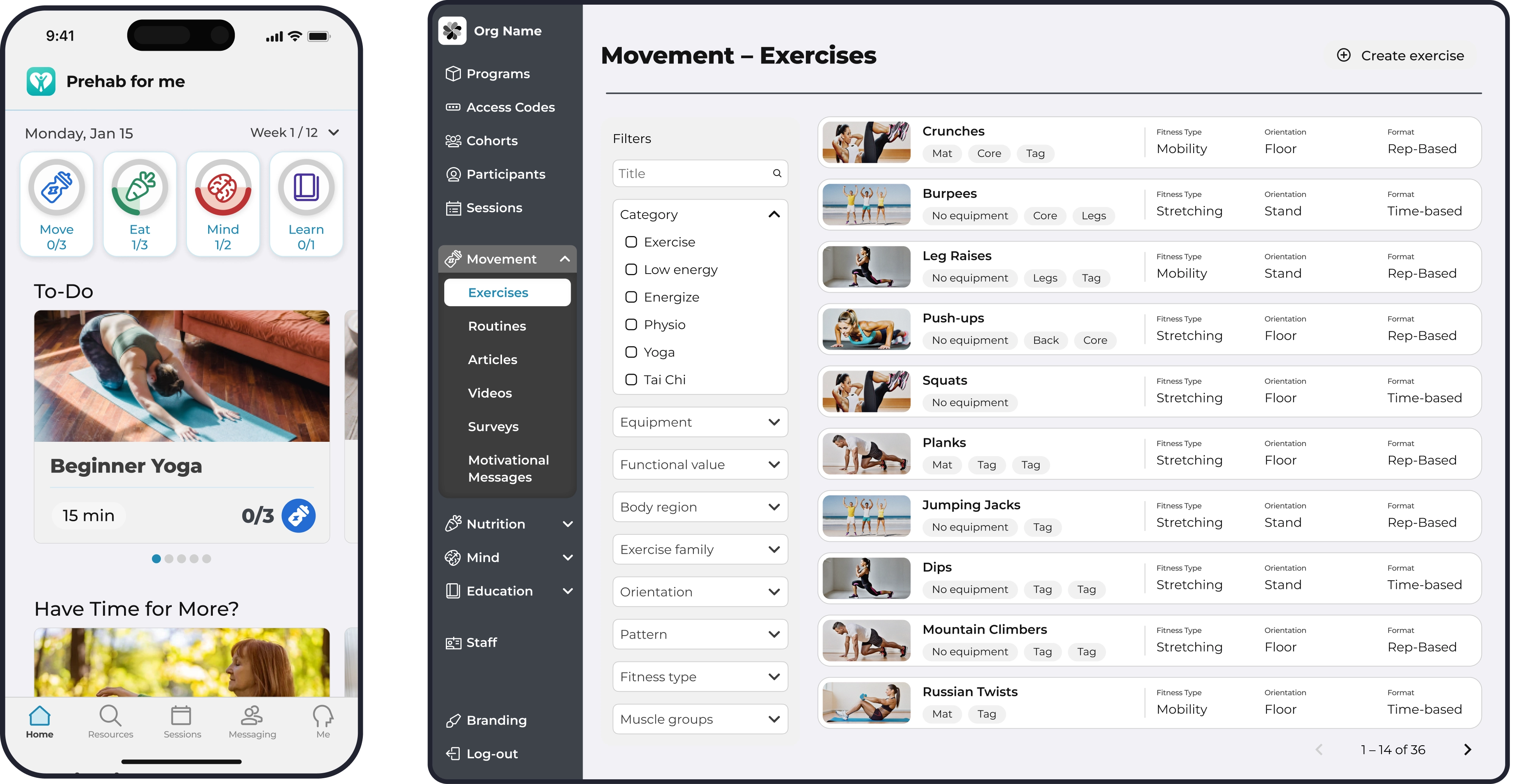
Surgery is a major life event, yet patient preparation and recovery are often fragmented. The doctor that idealized this software did research that showed that patients who adopt healthier habits before surgery experience significantly better outcomes and faster recovery times. Delivering such structured, holistic guidance (nutrition, exercise, mindfulness) requires specific tools to ensure a good patient experience.
I was brought in as the lead product designer to translate this medical insight into a viable, user-centred digital ecosystem. With the goal to assist clinics to deliver personalized, holistic care programs. And empower patients to actively participate in their own recovery journey.
Increase patient adherence by creating simple and easy to follow structured programs.
Clinicians have the ability to tailor programs for users specific needs.
Increase healthcare providers capacity to focus on patient’s health instead of admin tasks.
Challenge
The central tension of the project was to create an interface with granular, template-level control over complex care programs, while presenting patients with a serene, simple, and guided experience.
This wasn't just a UI problem. It was a data architecture and systems design problem. The "tons of relationships" between content items, program templates, and patient instances created a risk of an unusable admin panel and an unsustainable backend.
Process
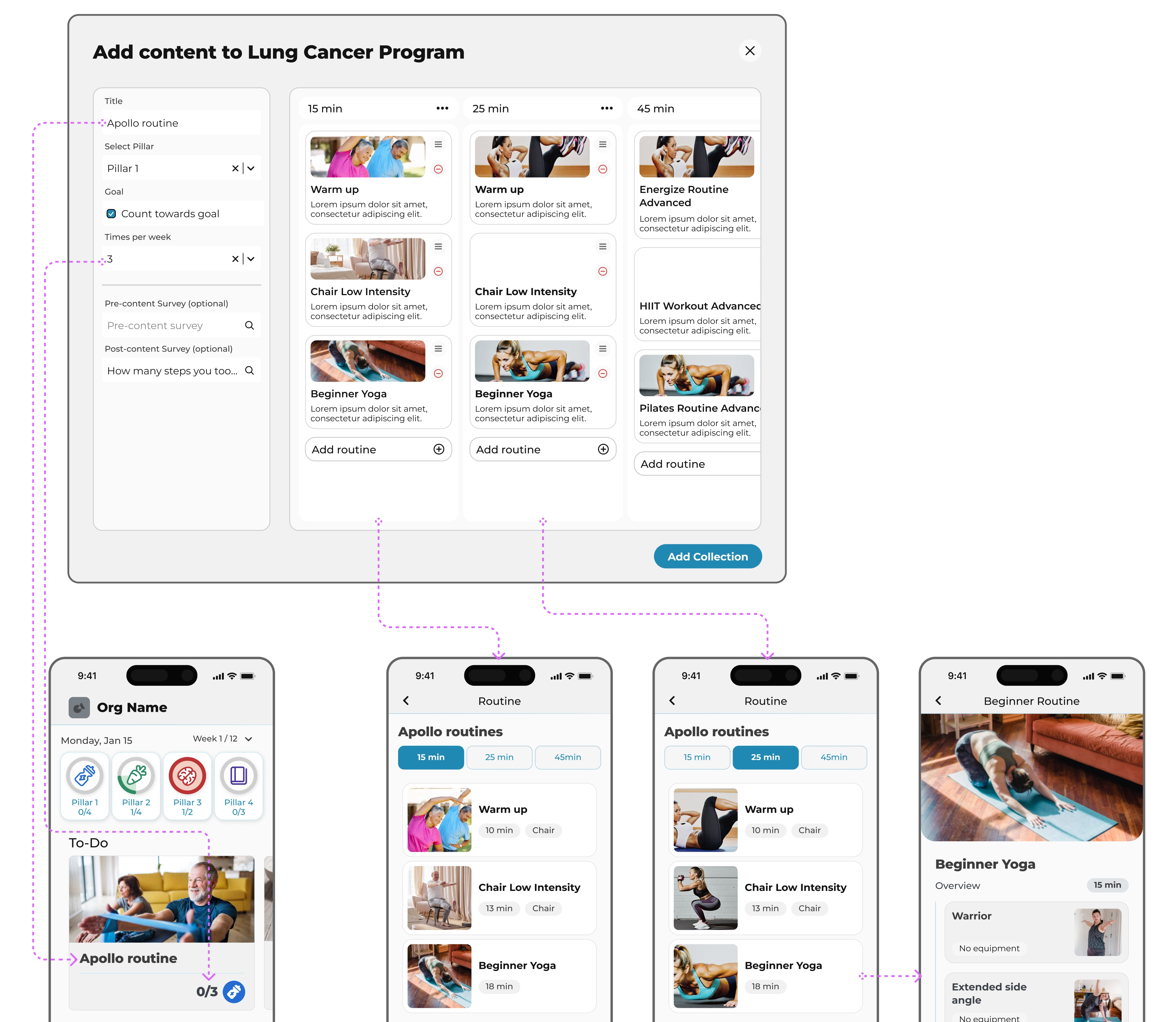
I didn't just design screens. I created visual system diagrams and entity relationship maps to facilitate conversations with engineers. We used these to understand: "If a clinician changes this ingredient in a recipe template, which patient instances are affected?"
Solution
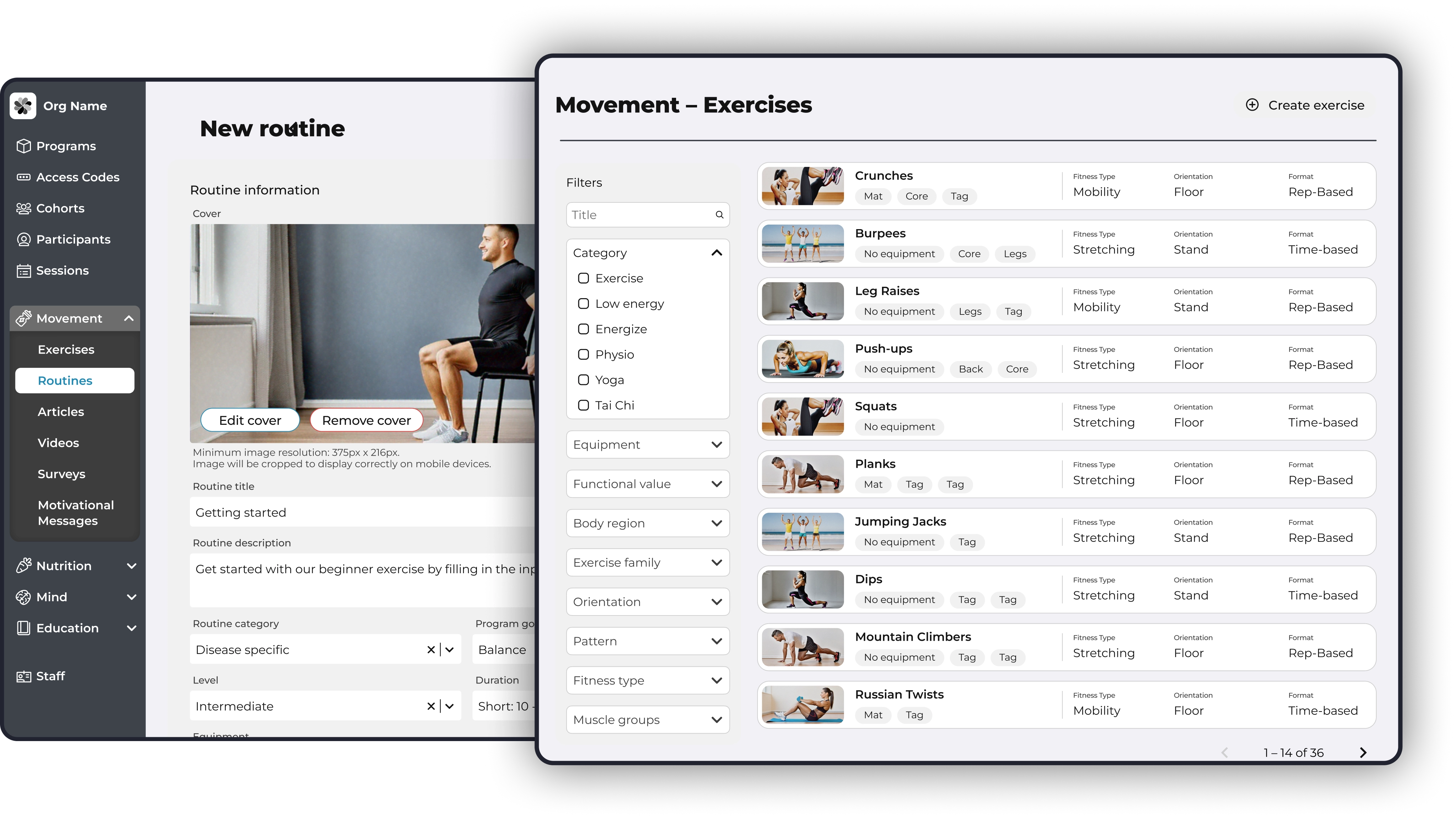
Visual Program Builder: A drag-and-drop interface for assembling weekly schedules from a library of pre-built content blocks (exercises, recipes, articles).
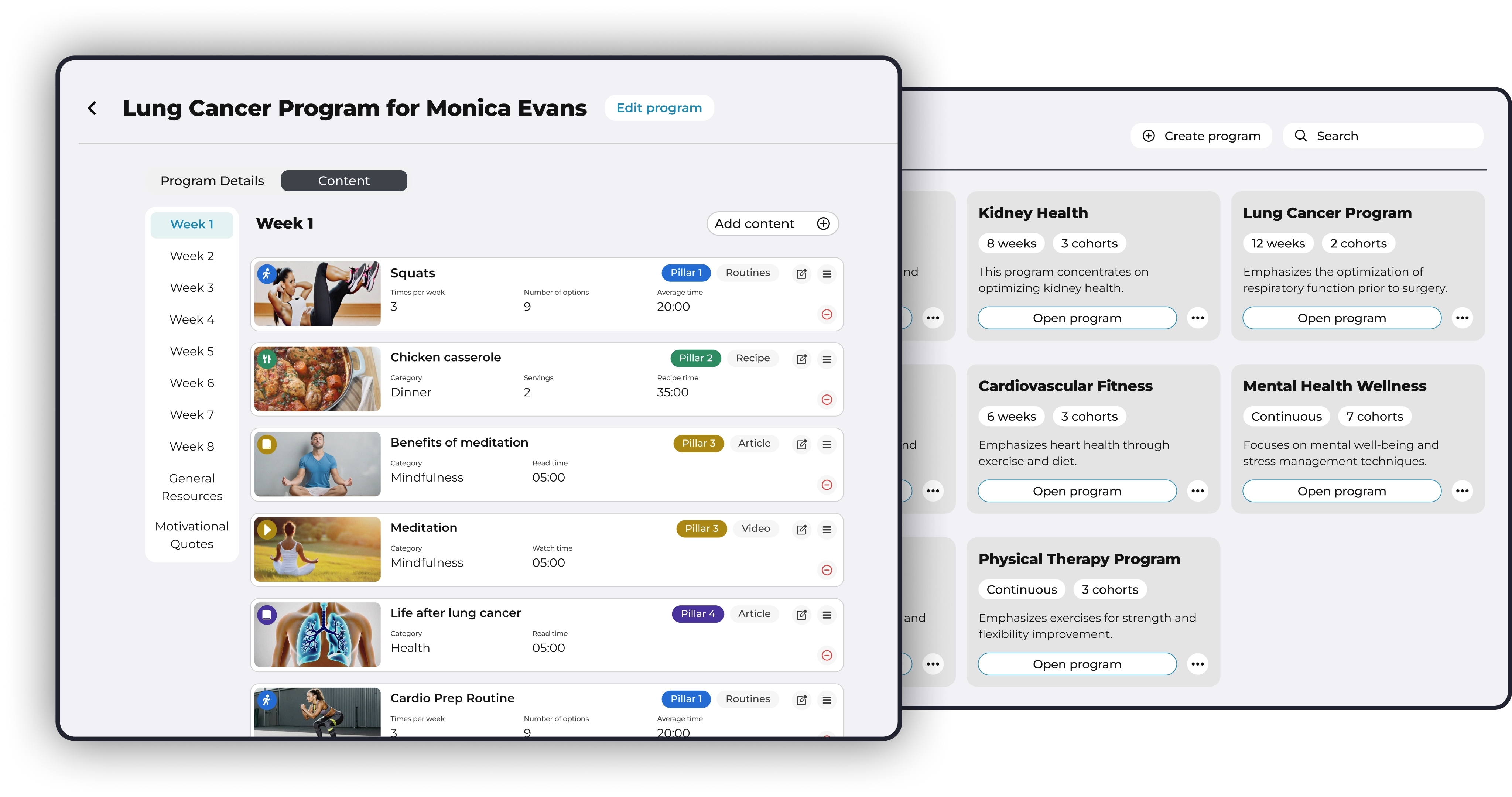
Granular Patient Management: A dashboard to view patient cohorts, assign/modify programs, and monitor completion rates and survey responses.
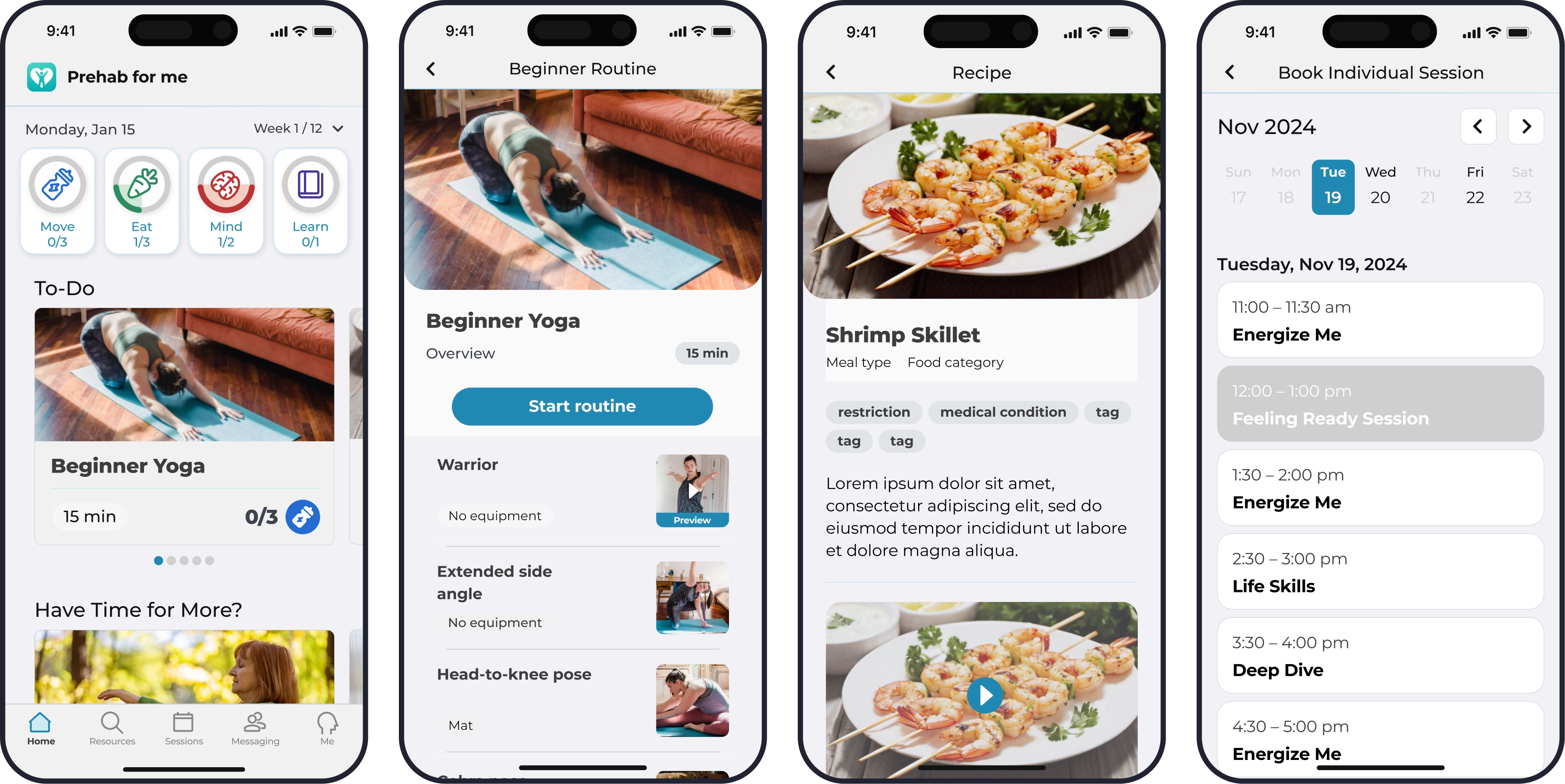
To-Do: A simple task list that shows patients the one thing they can do to improve their health today. Swipe to see more options, and a different section to encourage them to do more if they have the capacity.
Integrated Content Consumption: Tap a task to instantly launch the relevant video, recipe, or guided meditation—no searching, no confusion.
Outcomes
The MVP platform is currently in early-stage release, deployed with a small sample of patients for real-world validation.
The product will be used by clinical studies to measure the impact of structured pre-hab on patient outcomes (recovery time, complication rates, pain management).