Family Caregiving Project
Creating a Dedicated Workspace for Family Caregiving
Canada – 2024
Overview
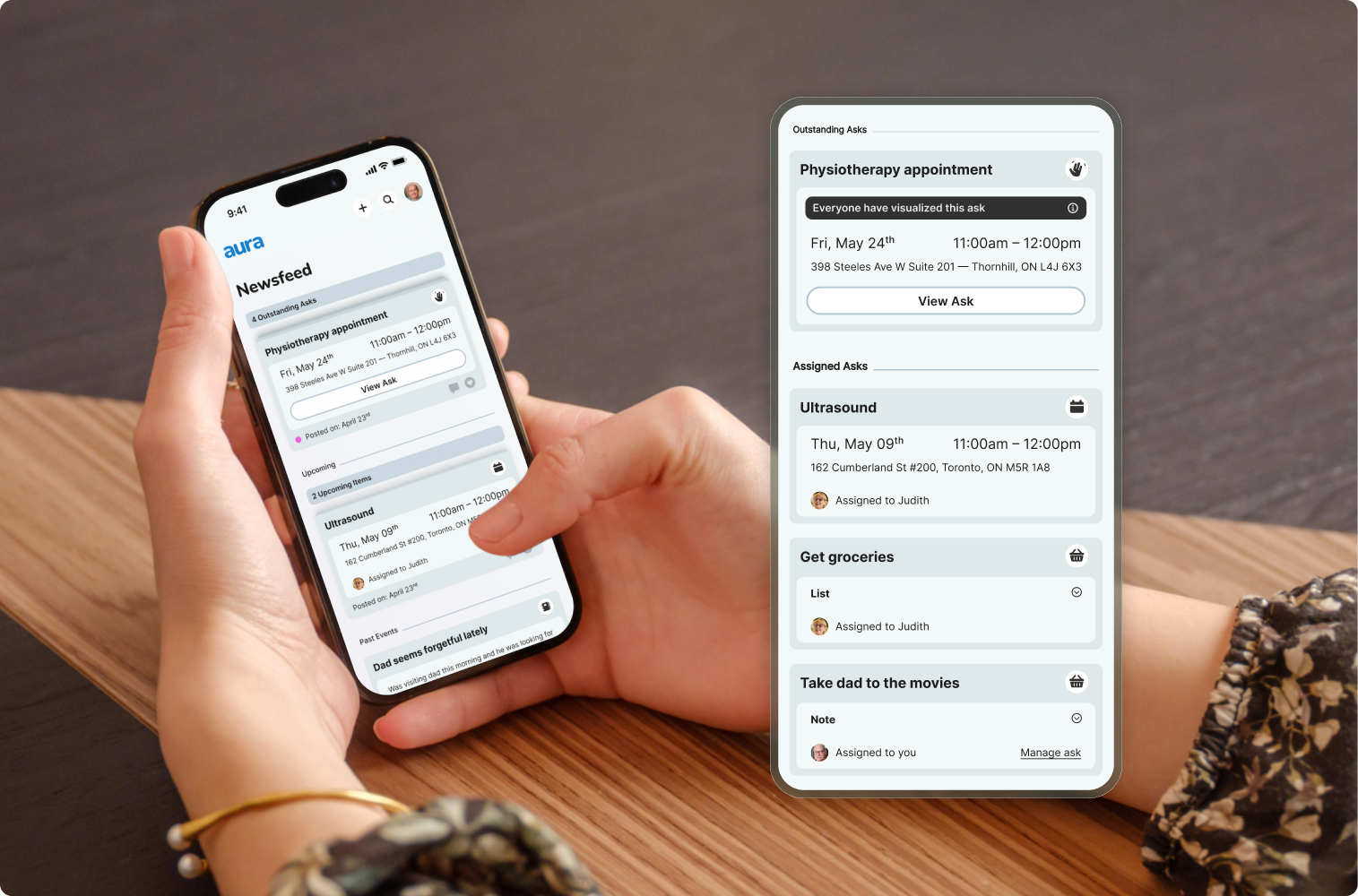
Caring for an aging family member is an act of love that often leads to burnout due to the mental load of coordination. This project focused on designing a collaborative platform for families caring for elders. The goal was to move beyond fragmented group chats and create a dedicated ecosystem where medical documentation, scheduling, and daily care tasks are transparent, accountable, and shared.
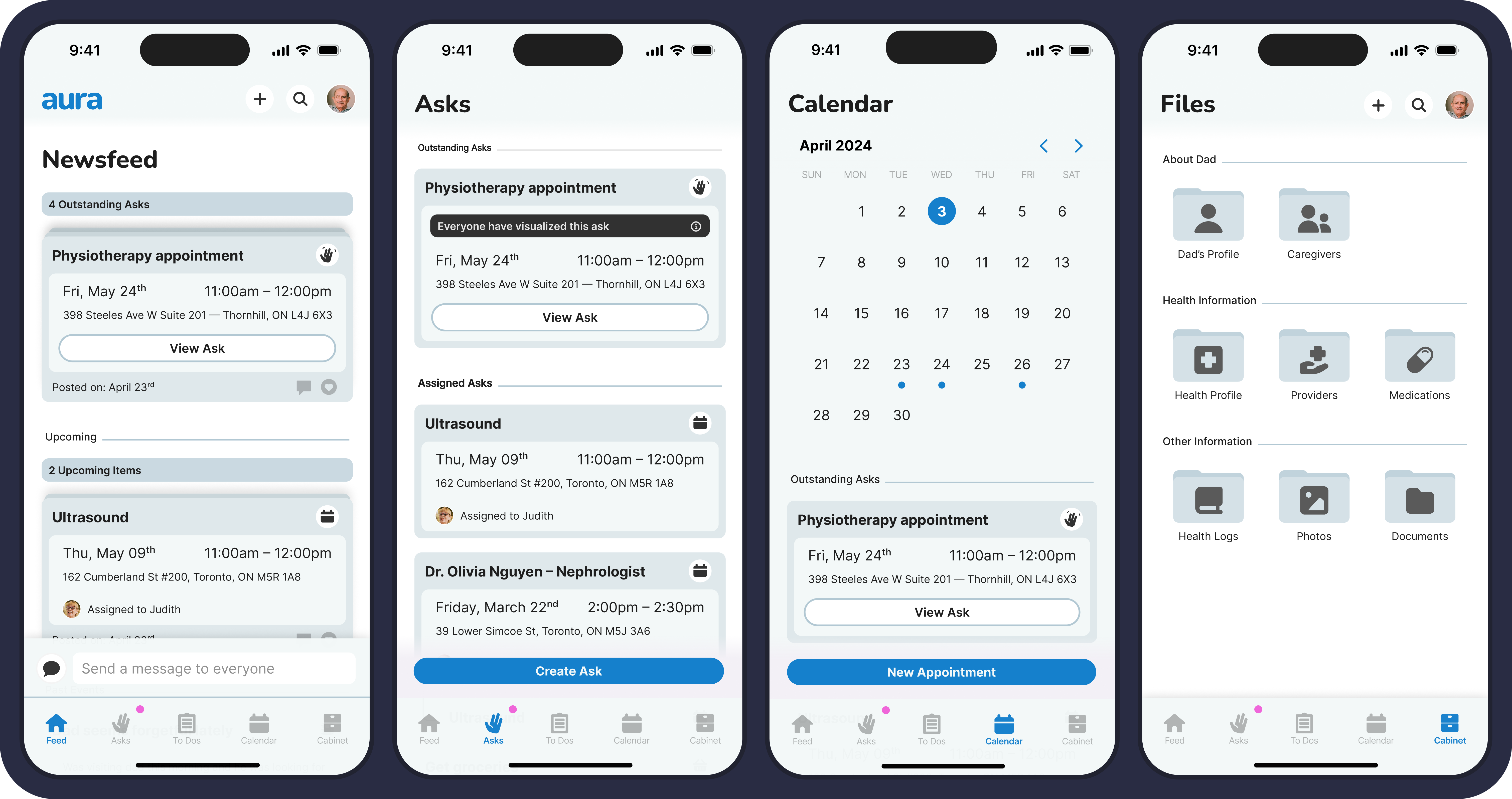
Friction of Asking: Research showed that caregivers feel guilty asking for help. The UI needed to make Asks feel like a logistical notification rather than a personal favor to lower the barrier for seeking support.
A Safety Net for Asks: If an Ask remains unassigned for a set period, the system alerts the primary caregiver. This allows for rescheduling an appointment or seeking outside help.
Context vs. Noise: Families often use group chats for caregiving, but critical health info gets lost in casual chatter. A dedicated "Care Feed" ensures that updates regarding the loved one remain the priority.
Challenges
The Emotional UX: Designing for people under high stress requires a low-friction, calming interface. We had to balance a high volume of information (medical files, calendars, tasks) without making the app feel clinical or overwhelming.
Role Hierarchy: How do we distinguish between the "Primary" caregiver and "Support" members without creating a rigid or exclusionary experience?
Adoption: Encouraging less tech-savvy family members to move away from traditional SMS/WhatsApp to a dedicated tool.
Designing for the "Unfilled" Task: A major challenge was handling the anxiety of a request that no one can fulfill. We had to design logic that provided the primary caregiver with enough lead time to find alternatives without spamming the family with "guilt-inducing" notifications.
Visual Accessibility & Calm: Since users are often operating under high stress or in a hurry, the UI needed to be hyper-organized yet physically comforting. We had to balance a high density of information (File Cabinet, Calendar, To-Dos) with a minimalist aesthetic.
Solution
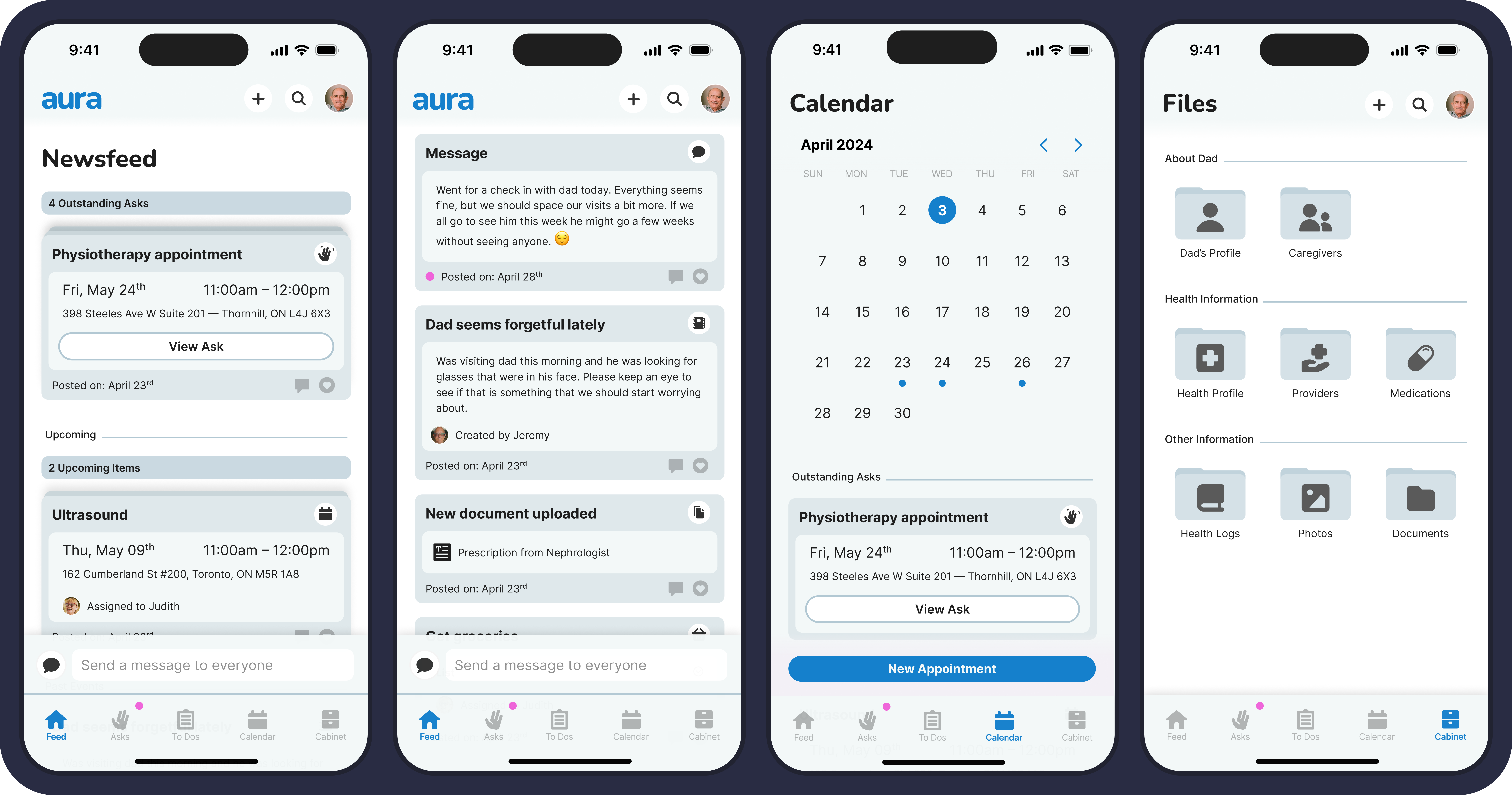
The Care Feed: Built a focused social stream for health updates and notes, allowing for threaded comments to keep specific medical discussions organized. Beyond medical notes, the feed allows family members to log social interactions and mood updates, giving a 360-degree view of the elder’s daily life.
Calendar & File Cabinet: Integrated a shared Care Calendar and a File Cabinet for medical documents to ensure every stakeholder has the same source of truth for appointments. That allows for family members to have important information at hand during medical appointments if needed.
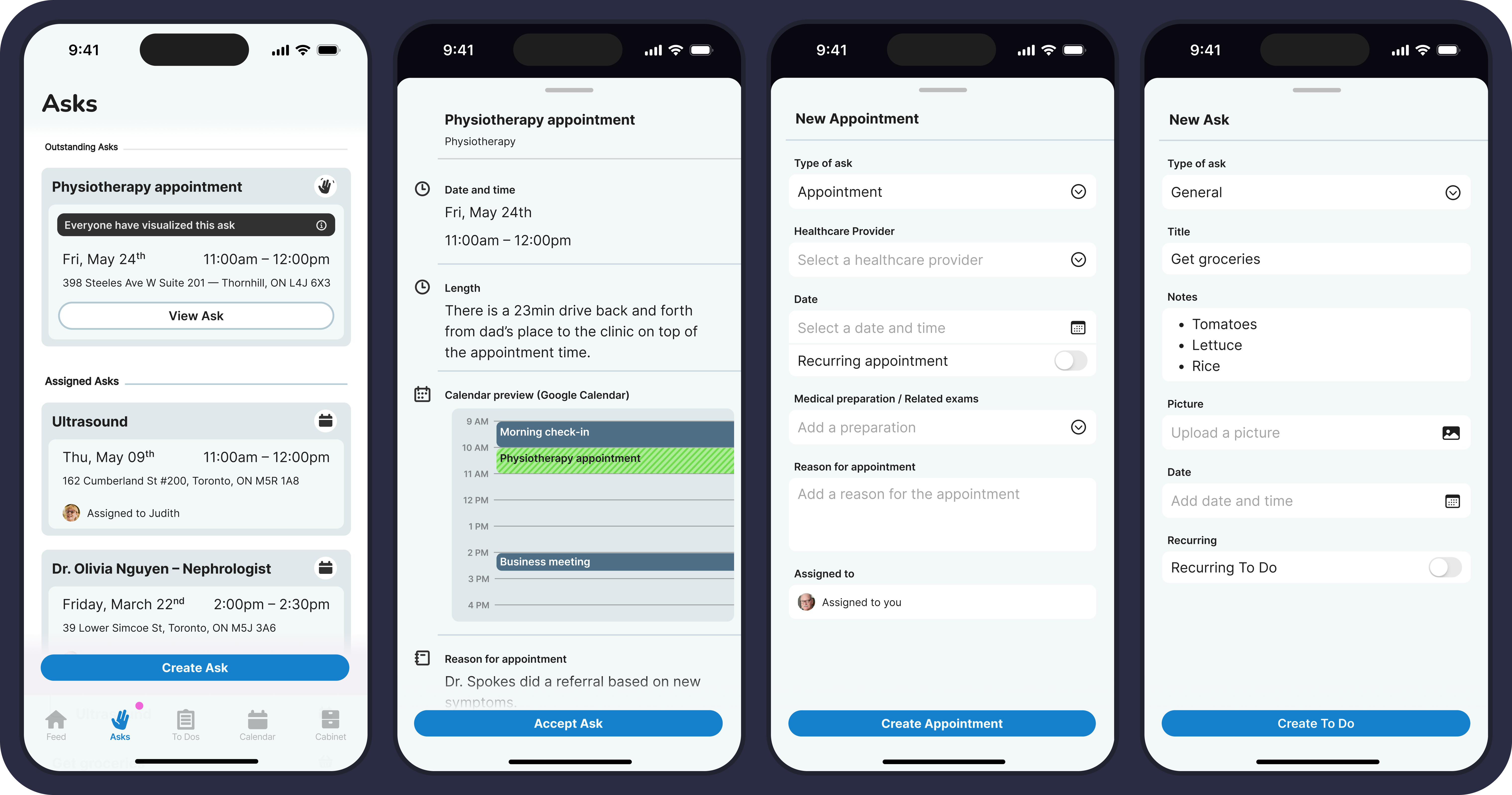
The Ask System: Designed a streamlined workflow where a caregiver can post a specific need (e.g., pick up prescription) and family members can claim it. Asks are broadcast to the family circle in the feed. Once claimed, the task moves to the volunteer's personal To-Do area, creating clear ownership.
To reduce cognitive load, I designed specialized task types with specific metadata. Medical Appointment Asks have location, date and time, and provider details. While more flexible General Asks for everyday errands supports optional photo uploads and notes.
Outcomes
"There are eight of us in our family... you really needed to know what the other person saw when they were there. This is a really clever tool that manages a lot of different information in a very useful way."
The app consolidated medical records and scheduling into a single "source of truth," reducing the communication overhead for families with multiple caregivers. By giving freedom for users to share anything with the messages in the feed, the app encouraged family members to participate in the joyful side of caregiving, not just the chores.